BackEpisode 07
Episode 07 · Season 01 · Aug 26, 2026
How Poetry Teaches Us to See
GuestTracy K. Smith
AffiliationPoet; Department of English, Harvard University
HostSimi
Episode07 / S01
ReleasedAug 26, 2026
Tracy K. SmithPoet; Department of English, Harvard University
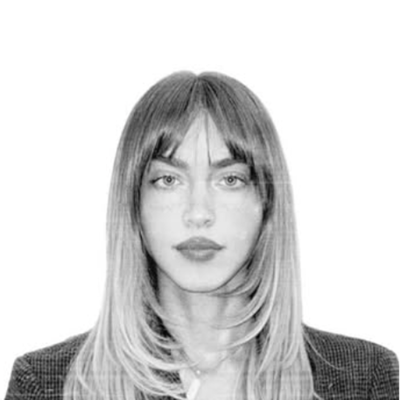
SimiHost, SPS Conversations
0:03
Simi
Today we’re speaking with Professor Tracy K. Smith, Pulitzer Prize-winning poet, former U.S. Poet Laureate, and professor of English at Harvard University. Thank you so much for being here, Professor Smith.
0:14
Smith
Thank you.
0:15
Simi
I came into your class after hearing you speak at the Harvard Book Store about your latest book, Fear Less. And I just remember, when I was listening to you speak, how you have such a beautiful way of bringing thoughts into language. And I thought that maybe if I ever got the chance to take a class with you, somehow through some form of osmosis I’d be able to absorb even a fraction of that gift. And then Haze and I found out that you were teaching a graduate seminar on Lucille Clifton, who I didn’t really know much about, but I became interested because poetry has often felt, at least in my adult life, like a niche art form and somewhat intimidating. So I thought this might be a perfect opportunity to get past that belief. And hearing you speak and reading your book, Fear Less, made poetry feel less like a code to crack and more like a way of just paying attention to life. And I thought, when I was listening to you: wow, this is someone who doesn’t just write and study poetry, but also lives inside the kind of discipline of attention that poetry asks of us. How did you come into your love for poetry, and what is the experience of writing poetry for you?
1:33
Smith
I love that question, and I love the sense of poetry as a way of being in the world. I loved writing when I was a young person, and I had written a few poems in high school and even elementary school, but I didn’t know that poetry was the vocation that I wanted to choose. I knew I wanted to be a writer at some point. But I was an undergraduate here at Harvard in the ‘90s, and the poetry classes that I was just beginning to take taught me that if I could look closely enough at anything, it could teach me something. And that felt like a gift at a time of life where I felt totally disoriented, intimidated, a little bit lost, and like I was often trying to keep up with everybody else, who just seemed to somehow know what they were doing. Turning to poetry workshops allowed me to really think about how poems can shape the way I see, how poems can give me the opportunity to ask more and different and better questions. And I think the test for me, in terms of what role this would play in my life, was turning to reading and writing poems as a way of approaching the fact, when I was a senior here, that my mother was going through the end stages of cancer, and that grief was something that I was going to have to experience and live with. Nothing else seemed helpful to me. Nothing else allowed me to ask unanswerable questions and to be honest with myself about what I didn’t know but needed to find. And it remains that for me, even when the stakes are much lower. Sometimes I feel like poetry says: if you want to, you can come more fully into reality. We live kind of like on the shores of reality. We can see things in the distance as complex and inviting and powerful, potentially transformative, but there’s so much that keeps us from really wading into that. And I think poetry is one art form that says we can dive into those waters. We can do it over and over again and discover the many different layers of the reality that we live with, that are constantly changing, constantly confounding, but also in some ways enlightening or nurturing or bolstering us. I guess the other thing I would add is, I believe that poems also invite us to think about others, strangers, in a way that’s different than what much in our culture seems to quietly or vividly encourage us to do, which is to sort of mistrust, to judge, to emphasize the differences between us and others and to use that as an excuse to choose a different direction. Poems approach us as the voice of a stranger in the world who has something to bear witness to or offer, that maybe leads us out of our own habitual sense of where we are, what we’re doing, but ultimately imparts something that, for me, brings me to realizations about experiences I’ve had or feelings that I live with that I don’t often bring into language. And that feels really urgent and useful right now.
5:00
Simi
I love that. It reminds me of “Miss Rosie” when you talk about that, because when I first read that, it made me think about how we’re actually implicated in these people’s lives who we kind of turn away from, and that we are part of the same humanity. It’s kind of like a slap in the face: you’re faced with this thing that you don’t really think about, or slow down enough to think about. But before we get into Clifton’s work, I want to talk a little bit about your class. Before taking the class, I mostly knew Lucille Clifton as a major literary figure connected to writers like Toni Morrison, Audre Lorde, Alice Walker, but I never really entered the work myself. And then coming into the class, it was just such an intimate experience, maybe nine of us around a table for three hours, sometimes with tea and cake, just doing close readings of the poems. And what amazed me was how deceptively simple the poems can feel at first, and then they just keep unfolding at all these different scales. I know Lucille Clifton was your teacher at Columbia at one point, and you said she’s still one of the poets that you continue to learn from. What was it about her work that made you realize it would be something you’d keep returning to, not just as a writer, but also feel compelled to teach?
6:29
Smith
I think her relationship to grief and loss was the first thing that made me know that she had the key to something that was important for me. I had her workshop in the fall of 1995 at Columbia, and I had lost my mother in the fall of 1994. And so, while I felt, okay, I’m ready to go back into the world, every time she talked about these ongoing relationships that she had with her deceased husband and children and mother and father, I felt like there was a form of existence that she understood that I needed to learn. And I felt like it was something that sat a little bit at a distance from me, but I knew at some point I would feel ready, maybe brave enough, or with the wherewithal to tap into something that was as real for me as those relationships were for her. So that’s the first thing. And I think that trust in her vision of existence allowed me to see that her poems, for me, operate like wormholes in a way. You enter into this really concise space that feels like the world that you know, and then it leads you into some far reach of the cosmos where you have a greater sense of courage and willingness than you do on Earth, and the distance between you and everything else feels more approachable, more real, more capable of being entered, responded to in a way that’s honest.
8:17
Simi
And I feel like even our assignments felt like a discovery process rather than a discursive exercise. I felt like an archaeologist excavating all this meaning all the time. And speaking of our assignments, I had an interesting experience with our final paper, where I felt like I was sort of figuring out what the paper was about as I was writing it. I just kept having all these moments where I was like, “Oh my god, this is what this is about. Now I understand what this is about.” I started out with this really clear outline, and then the final product came out of a completely different path. And then I thought to myself: of course, such is the nature of life.
9:01
Smith
It sounds like you might just go ahead and start writing more poems as a result, because that’s what the process of writing a poem feels like to me every time. So much so that I now am looking for the moment when I’m led away from what I think I’m aware of to what’s really at stake, or what’s really alive with possibility.
9:21
Simi
It made me also think about how Lucille Clifton describes her writing as trying to serve the poem rather than control it. And I also thought about my friend Vincent, who’s a filmmaker, who would always say, “If I can fully think it in advance, then it’s already old,” which to me means that creativity involves giving up some sort of control and allowing the work to transform as you’re making it.
9:45
Smith
It’s a really interesting way of working on questions with such high stakes as the ones Clifton is interested in, right? If you have a vision of what is moral and what is correct in life, it’s really hard to let go of the wheel, the reins, and say, “Okay, I’m going to just see where this leads,” because you know what the outcome ought to be. But as somebody who’s writing with that sense of stakes in mind, to trust that the poem will know better, the poem will teach you how to see another person, or how to describe and submit to the material of the world: I think it’s this really wonderful leap of faith. And the more, even through the semester, talking about her every week with all of you, I understand that those solutions she understands, where they lie, the shifts in perspective, the shifts in allegiance that her poems invite us to test out, they’re not a fixed target. I feel like even for Clifton, returning again to the same questions of history or the same questions of family, there’s always the willingness to be led in a different direction, or led to a different version of what might be more useful in that moment.
11:08
Simi
Yeah. Because I think so many of us are trained to approach life with a plan, yet some of the best work seems to come from a place closer to surrender, and just the patience and attentiveness that come along with it. So how do you trust that process in your own work, and sort of ideate through a place of surrender?
11:29
Smith
It’s easy to do when you’re writing by yourself. It’s easy to do when you know that the thing you’re working on may come to fruition, it may become a full-fledged poem, maybe a public document, but it doesn’t have to. And so in some ways, being in that state where something could become, if you can listen and risk in the right ways, and also where it just might not happen: it’s kind of thrilling to know that there’s a chance of that magic happening. And even the heartbreak that I feel with poems that don’t quite get realized, the stakes are very low. Those poems might never see the light of day, but it means that I don’t necessarily have to be accountable for not being able to realize this thing that seemed at one point possible. It also means, as with Clifton and her revisions over time, I just might not be ready at the moment to tap into something as vigorously and fearlessly as is needed. And if I learn more and experience more, I can come back and try again. It’s different from what we are taught to claim at a place like Harvard in some ways, where success is a really important thing. The outcome, the fruits of an effort, are things that are often measured and held up as proof of something: this problem is something we can resolve, and here is how. But to become comfortable with that possibility, I think, is really important, and art is one space where the possibility of momentary failure is something we can become more comfortable with.
13:11
Simi
One thing I kept noticing in Clifton’s work is how she often returns to biblical stories and refigures them to give voice to characters who aren’t usually prioritized in the official version. She lets Eve speak in the creation story, and Eve is thinking, and she gives voice to a crab, and to people and creatures that we’re not really used to hearing speak, or to figures that we think we understand, and then she shows us another side to them. So she keeps shifting the center of perception itself, and asking what happens when the ones who are usually observed become the observers. For me, that really widened my sense of what I could give voice to, and it helped me access my imagination more ambitiously, in ways that we often lose as we grow up and inherit more fixed ways of seeing and categorizing the world. So why do you think it’s so important for art to interrupt our perception?
14:02
Smith
I think every time we realize that there is a counterpoint to a viewpoint that we trust and accept and live with, the world becomes larger and stranger, and we become more authorized to step into these other versions of ourselves; to acknowledge that the comfortable story, or the habitual story, has left something out that holds a vital testimony, and that in that vital testimony, even if it’s somebody who’s usually been sidelined as the villain or as a minuscule character, there’s something that we need. There’s some aspect of ourselves, individually and collectively, that can be found there. And I just feel like, I don’t know if this is really pessimistic, but we’re so far into the story of humanity. The stakes feel so high. The possibility of failure feels so near that we can’t afford to dismiss any of these viewpoints, any of the lenses that are available to us to understand who we are and who we might choose to be. Again, the stakes of a poem are relatively small, but they can open up a possibility that could be world-changing.
15:33
Simi
Literally. Even what you’re talking about: when you see a word and all of a sudden it means something completely different, or you see two words together and you’re like, wait, now that they’re near each other, it totally refigures the way that we have inherited our language and our thought process and our perception. Something that I always think about is this moment in Generations where Lucille Clifton is going through all these historical records, frantically searching through all these papers, trying to prove stories that her father told her, that she spent her whole life hearing. And her husband, seeing her frustration, tells her: don’t worry, even the lies are true. What I loved so much about that line is the total perspective shift, that facts and truth aren’t always the same thing. For example, I always say my mom is the best mom in the world. Is that a verifiable fact? I don’t know. It is. But it’s very true for me. But stories, even in their exaggerations, especially stories within histories that have been submerged or excluded, can hold so much more than facts could ever hold. So how do you think about that relationship between fact and truth?
16:58
Smith
I think about it in one way: moving toward what we believe is possible, or could have been true but is as yet unverified, allows us to think more vigorously into what we do know about history, or about the people we’re looking for. I’ll be more specific. I have a book called To Free the Captives, which spends a little bit of time looking for members of my own family in various archives, finding evidence of their lives, but recognizing where that paper trail runs out, and being pushed to a point of having to fill in the dots between one decade and another, one piece of a grandparent’s story and the next piece, where all I have is census data. And it allows me to think about what I know about people and about family, and about the skills, resources, and insistence that characterized lives that were decentralized and working within a lot of wild constraints. For me, what emerges in those spaces is the fact that love is a powerful tool. It’s something that allows people to make a way out of no way, again and again in history. And it pushes me to enlarge the space that act, making a way out of no way, can occupy in my imagination. It becomes a framework for thinking about what we might do in impossible circumstances, which, if we’re honest, we live with right now and deal with in our own ways. And somehow that becomes, for me, a tool of survival, resilience, transformation and hope. And there’s so much in the archive that really works against our belief in hope, or can, that I’m willing to scoop up those thin but fruit-bearing narratives and use them as I can. Poetry asks us, or allows us, to do that, even with the imagined life of the speaker of a poem, who may or may not be real, whose story may or may not be based in fact, but who has, I want to say, a circuitry of imagination and a sense of possibility that in some ways seems capable of that miraculous act of making a way out of no way.
19:34
Simi
That is so beautiful. You see what I mean by you have such a beautiful way of bringing thoughts into language. I actually think it’s so interesting that you talk about filling in the liminal space. Haze wrote her paper on how our brain is actually most active in those liminal spaces, and how maybe poetry offers a way to enact something that is ineffable within those spaces. I was thinking about how in class you described Clifton’s poetry as mapping out a pathway to a kind of spiritual enlightenment. And I keep thinking about this line, “these failures are my job,” and the way her work seems less interested in arriving at answers than in the act of returning itself, even as a sort of devotional act. What do you think that pathway is that she’s guiding us along? And how has spending so much time in her work changed your own spiritual landscape?
20:32
Smith
Oh, I think the second part of that question is so big, I don’t really know exactly how to answer it. But she’s invited me to bring a sense of spiritual existence into my vocabulary for poetry, into my public voice, which is something that I think many of us feel nervous or shy about doing. For me, it was at the point of losing my father, and realizing how much magic we live with, or mystery we live with, that made it necessary for those things to converge. And Clifton was a poet who helped me bring them together. But if we think about Clifton as somebody who’s also really interested in history, every time she goes back to biblical narrative, she’s going back to a kind of history, even if what we think of as history is the myths that we tell ourselves about who we’ve been and who we must be, or are destined to become. She goes back to them over and over again, and she’s willing to shift the voice and change the balance of power. And in doing that, I think she’s also saying that the history of humankind is a history of failure in many ways. So: these failures are my job. Maybe these failures are our job. We keep coming back to questions of power, coming back to questions of transcendence, coming back to this crossroads where choosing to see an other as an enemy or as kin are the options that are available to us. And maybe at some point we will be working with something other than failure. We will be reaping the fruits of something other than fear, habit, deflection to the norms that many of us feel pressured to conform to.
22:10
Simi
One of our friends in the class, Senna, I was asking her what was the biggest thing she got out of the class, and she was saying, because she’s had people pass in her life recently, that your way of speaking about this other realm made her feel comforted, that somehow there’s still life in the other realm. And I just found it so interesting how Clifton is so open with that other side, that it makes us feel like, why does she find it so obvious? It’s like, okay, I want to get in on this.
22:56
Smith
She’s almost like a guide to these other dimensions that can become more and more real for us. And she talks in her work about other poets and other figures who have established this as a precedent. Her mother is one, who communicates with her after transitioning out of human life. But she also has a poem about William Blake, who is also a visionary figure who was able to see into other realms, and was fearless or shameless in talking about that. And I think even the miracles of the New Testament are interesting to her. I think it also has to do with this sense that there is a veil, or a barrier, that we can look beyond. We can willingly move toward it, but we have to do so with a willingness to be startled, terrified, burdened by what’s there. And I guess one of the things I take away from her work is that awe, or terror, might be more bearable than the terror of violence, hatred, division, all of those human errors that we’ve normalized in our lives.
24:07
Simi
I actually want to read something from Toni Morrison’s foreword in Clifton’s book, based off of what we’ve been talking about. “During one of our conversations in my office, she told me that she spoke fairly regularly to her deceased mother. ‘Really? How?’ I asked. ‘Prayer?’ ‘No,’ she said. ‘Ouija board.’ I smiled, not with condescension, I hope, but with fascination. ‘What does she say?’ ‘Many things,’ she answered. ‘But I get the impression she isn’t very interested in me. Once I asked her about something extremely important to me, and she said, Excuse me, I have to go. I have something to do.’ Something to do. I was mesmerized. The dead have active, curious, busy existences? Lucille assured me it seemed to be so. I was happy beyond belief to contemplate the afterlife that way. Not as some static hymnal-singing, self-aggrandizing chorus, nor blank preconsciousness, but life otherwise.” What do you think changes in us to imagine the dead as still active and alive in some way?
25:15
Smith
Well, so many things, even in that little description, can change, right? One thing is the view of existence where we humans are not centered, where one’s own mother could only have so much time to have a conversation with her living daughter, because she has things to do, somewhere to be. And so what does that mean? I think it is one of the reasons why Clifton’s large view of cosmic existence isn’t centered upon our human living. We are actually accountable to something much larger. We’re also crucial to its unfolding. And that shifting sense of our own importance, I think, is really inviting. It means that we have these allies or collaborators who are active, who have other investments, and who are nonetheless interested, to a degree, in our human living. It says there is a place where these things might converge. It feels like a different terrain. The scale of that imagination is very consoling to me. And not just because there’s a deceased mother who’s willing to give her living daughter some time, but because it means we actually haven’t gotten to a sense of the full picture, and that there’s more that we might be beholden to, more that we’re accountable to, but also perhaps more that’s willing to work with us. That, to me, has saved my life many times. And even more broadly, when her poems are not addressing some of these beliefs that she became willing to hold and to write about, they’re often saying a shift in scale can allow us to see this problem, this problem that’s political in nature, as more surmountable. A shift in scale can allow us to recognize that we are working alongside other sovereign life forms, like plant life, like animal life, like the earth itself. It shakes me out of some habitual givens that we live with, that maybe tempt us toward just going with the flow and doing things as they’ve always been taught.
27:28
Simi
When you’re talking about it, I just think about the playfulness with which she approaches these subjects, and even the playfulness with which she places two characters within a poem that have completely different associations in our head. Like that poem, “Marley was dead to begin with,” which originally is from Charles Dickens’s A Christmas Carol, the opening line. And then all of a sudden you feel Bob Marley hovering in the poem, and you’re like, what’s going on? But it made me think about this line, “dead to begin with.” What does that mean? I was really sitting with that and thinking that maybe it means that the dead, even before they come into the physical realm, or if we were dead to begin with, come here with a greater duty to fulfill, and that life becomes a sort of gift to enact this responsibility that we have. And that being in the other realm is a way of permeating our collective consciousness, or political consciousness in this case. But I just loved how she put these two people together in such a playful way, and how they coexist in such a new way in the poem.
28:36
Smith
Yeah, she’s so good at disarming us and then allowing us to just accept terms that we’ve been taught not to think of as compatible with one another. When I hear that opening line, I also think about the opening of her poem “after Kent State,” which is thinking about death in terms of war and destruction, and the ways of death that humans choose in obedience to the desire for power over others, power over the environment, amassing certain forms of wealth and authority. And she believes in that form of death as well. So every time that these terms come up, we’re asked to think about how and whether they relate to one another, and which is more real. What if this other form of death that you’re talking about, that leads into that large space where your presence and your actions and your capacities are essential to some ongoing thing, what if that’s realer than the death drive that tells us power and wealth are more important than anything else? And then suddenly the world becomes a different kind of place.
29:42
Simi
The other day, during Haze’s conversation with the law professor, they were talking about how students come into law school with this dream of pursuing justice, and then slowly get pressured to see those moral concerns as sentimental or even unprofessional. And it made me think about this broader culture of compartmentalization, where you have your work self, your social self, your family self, and they come so naturally to us, and this idea that bringing your whole self into any space is seen as somehow inappropriate. And I started realizing that this isn’t a bug. It’s a deliberate feature of a dissonance-reducing machine that trains us to separate our conscience from our actions, until we can participate in something harmful without fully feeling our role in it. And on top of that, we’re living in this culture of acceleration where you could just never be fast enough. So there’s never even time to stop and consider what this compartmentalized way of living is, or how it’s actually dehumanizing us. So what do you think can help us resist this numbness and fragmentation?
31:00
Smith
Well, I think that slowing down, in whatever deliberate way one can, is a really powerful practice to claim and insist upon, because, as you’re saying, so much of what’s valorized is efficiency and moving smoothly through the prescribed motions and rites, and to do that without thinking or blinking or asking becomes a form of success. And as you describe it, it moves us toward ends that downplay justice and concern and conscience as relics of another time. Anything that can make you self-conscious of that pattern, and anything that can startle or challenge you to disrupt it, I think can be really useful. That’s a role that poems play for poets, I believe. It’s a role I encourage my students to indulge in as we read. We read these poems out loud. We think about them in many different ways. We do something that feels so luxurious and impractical in class. And it’s a way of thinking about the possibilities that language opens up for us, and the conundrums that language can help us move into and work upon. And to my mind, that’s a really worthy and practical undertaking, as we think about how swiftly so much that we prize is being imperiled by the choreography of that system that you talked about. It’s not necessarily out of anything evil, but just compliance with something where perhaps the endgame is detrimental to most and beneficial to some.
32:51
Simi
It’s crazy to think that this kind of pressure these students are feeling is them being pushed towards compliance, and they don’t even realize it’s happening. There’s something really sad about that. And I hope people start using art forms like poetry or music, or any other art forms that can help them tap into their intuition more, tap into other people more.
33:13
Smith
I think it’s really possible. More and more, as a poet, I see how poems are allowing students to get a different purchase on the granular realities of history. You get closer to the stakes that people live with. You get closer to the choice making. You get closer to the lives that have been victim to certain forms of change over time. Sometimes people use theater to think about questions that we usually relegate to other contexts, like law, like policing, like policy. So I think it just means having a little bit of willingness to disarm some of our ordinary associations about what goes with what. Harvard is a great place for that. The fact that we’re having this conversation at the law school is a reminder that we’re working, by way of different tools, on aspects of the very same questions, and we need these other perspectives, even if they’re something that allows us to push back against what our own assumptions within our own vocabulary sometimes are.
34:20
Simi
And when you’re talking about reading these poems being a sort of luxury, which they totally are, especially in the setting of your class: but poetry is not a luxury.
34:33
Smith
Audre Lorde.
34:35
Simi
Audre Lorde. Yeah. It’s funny, because I think about how during class, when you’re talking to us about reading the poem and paying attention to certain verbs and how they connect to the atmosphere of the poem, sometimes I feel myself having a visceral, bodily reaction to a certain word. And I remember when you said that certain images arrive in the body first. I find that so beautiful, because it reminds me that we are constantly affecting each other in ways that exceed language, and that there’s this deep level of interdependence where life only really comes into its full color through our willingness to be moved by one another. I find that really beautiful in a world that pushes such extreme individualization. And I was wondering how you think poetry can help us move beyond the illusion of separateness.
35:33
Smith
I think the way that you talk about the visceral experience is one huge way: allowing oneself to say, oh, the work of a poem isn’t only happening up here in that cognitive space. It overtakes me from many different sense systems, and it moves by way of many different forms of what we think of as sense. And trusting that there’s an authority in that, an authority in the visceral reaction; that we are also thinking and feeling and discerning from within; allowing those things to speak to us and challenge us in certain ways, I think, is really wonderful. I also think that poems make us resourceful with things that we’re told don’t hold meaning, like absence and silence. They do a lot of work in a poem. They challenge us to anticipate, or to live in the reverberation of something that’s come through. And those are spaces that I think are analogous to how we live with events, how we live with the presence of, or our distance from, others. And it’s not something to be ignored or rushed through. Silence is also, in a poem, sometimes a way of allowing the discomfort of hearing evidence of what is undeniable in the body, in the white space on the page, and corroborating that, or trying to think of something with which to counteract it. That also feels like something that’s analogous to things that we live with in the day-to-day, and in our social interactions with others.
37:12
Simi
I love how you’re also talking about the body as being a form of accountability for us, too, because we often think of accountability as coming through other people, but your body can tell you so much. And I know your first poetry book was The Body’s Question, and I just love that title, because when I first read it I was like, is the body asking a question? What’s the question?
37:42
Smith
And the answer is yes.
37:43
Simi
Yes. What led you to making that the title of the book?
37:51
Smith
It was hard for me to figure out what to call my first book. So I was thinking about what some of the major themes or sites were that I returned to. One had to do with mortality. It was a book in which I was in large part confronting the fact of my mother’s death, revisiting facets of our life together, but also speaking into that distance between us, at that point when I was just coming into what felt like the fullness of my own individual experience, and also dealing with the absence of her presence in the day-to-day. But then it’s a book also about desire, about claiming or embracing the way that life brings you into collision with others, and with places, with choices. And it felt like a lot of that is located in the body, or in the sense of the border between ourselves and others. The line that gives the book its title comes from a poem in which I was reflecting on my mother in those last months, watching her let go of living, and the line is: “I know you are deciding that the body is a question. What do you believe in?” And in some ways, that sense of belief: I think I was knocking at that door that Clifton assured me was available to all of us, but also just imagining that my mother was also becoming aware of it and deciding to open it.
39:26
Simi
Thank you for sharing that. I was wondering if you would want to read anything from any of these wonderful books you brought. We don’t have to.
39:35
Smith
We should read a Clifton poem, if you think that we can.
39:37
Simi
Yeah, of course.
39:40
Smith
I don’t know, there are so many. But there was one poem I flagged, from “at the gate: uncollected poems, 1987 to 2010,” which is edited by Kazim Ali, who’s done a lot of wonderful recent scholarship on Clifton. It’s a poem that I think allows her to speak to the sense of the divine, and language, and mortality, and existence really beautifully. It’s an untitled poem, as many of her poems are. And it’s also a poem that turns toward many different language systems, cultures, and belief systems as tools for getting a better grip on what it means to be alive, what we are doing, and what we’re doing wrong. “I begged the divine to speak to me. Speak in the tongue of Lakota, which has no word for animal. Or speak in the tongue of Inuit, with its hundred names for snow. Or speak in the clamorous tongue of bells. Or speak in the cleansing tongue of fire. Or speak in the ocean. Speak in the air. Speak to me. I begged the divine, and waited a long time there in my room, in the stillness that is God.” And it’s a poem where a lot of white space begins to open up as we move toward the ineffable, or the stillness that she locates, which is another way of giving weight and purpose to a kind of silence, to what we might mistake for absence. And so I love the way that her listening claims these other forms of possibility, these other forms of the divine. If it’s true that our poems teach us things about the world, I love the way that her poems and her questions, her longings, her doubts, allow her to build version after version of a world where everything that we think is missing bears a really powerful kind of weight, and becomes a kind of practice or patience or tool that we might turn to. As a writer, I feel like I’ve learned from making use of those things. And now, as you can hear in the way I talk about her work, I’m trying to make use of them as a human, as a soul in the universe who wants to be of use to this large thing that we are.
42:12
Simi
When you were reading that, I was also seeing the way the poem’s spacing reminds me that what sometimes feels so unsettling about our world today is this condition that we call freedom, which is sort of to be unaffected, or to not need anyone, and to just do whatever you want, and nobody can really tell you anything. And I think what Clifton keeps coming back to is this feeling that, actually, no: to be fully alive is to be permeable, is to be connected, is to be in these spaces of connection and care with other people, with the world, with animals, with any sentient beings. So yeah, I think that’s really special. And to conclude, I want to leave us with something Sidney Clifton said the other day when she visited us in class, which, thank you so much for that, that was so cool. She said that poetry is not about the words on the page, but the way we move through the world. So I wanted to thank you for your generous teaching, for your attentiveness in your teaching, for being a part of this speaker series, and for making us stewards of Clifton’s work, and also helping us reclaim ourselves as poets in the way that we pay attention to each other, to the world, to feelings, to detail. So thank you so much.
43:38
Smith
Oh, thank you. Wonderful questions.
Discuss this episode
0 commentsNothing written yet. The first comment sets the tone.
Recommended books
06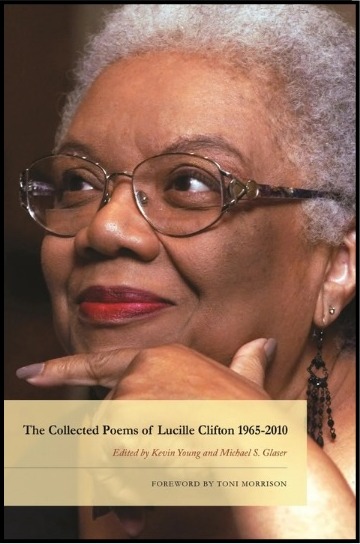 BookThe Collected Poems of Lucille CliftonLucille Clifton, 2012The central text of Smith’s seminar: nearly five decades of Clifton’s poems, published and unpublished.
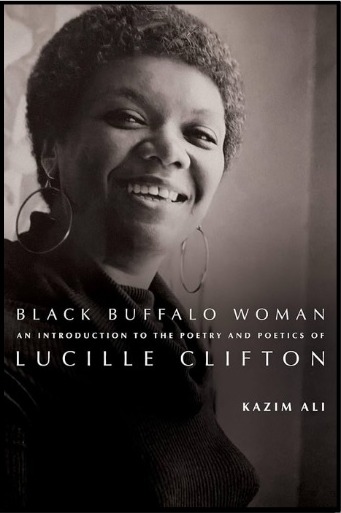 BookBlack Buffalo WomanKazim Ali, 2024A study of Clifton’s poetry and poetics; Smith assigned its “Buffalo War” chapter.
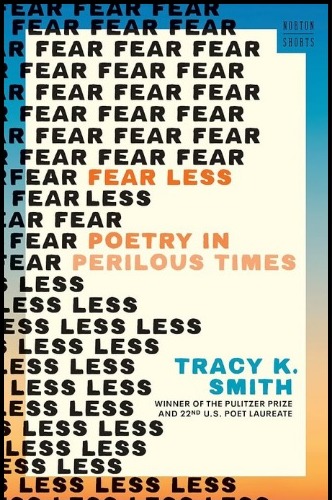 BookFear LessTracy K. Smith, 2025Poetry as rooted in capacities we already have: to love, question, imagine, and connect.
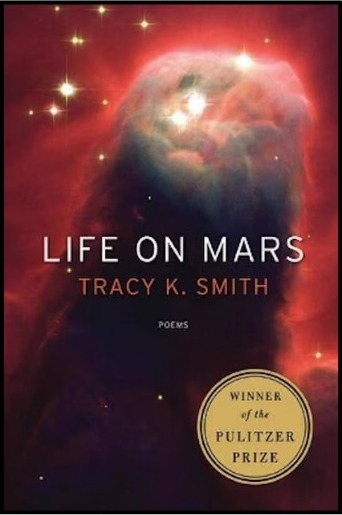 BookLife on MarsTracy K. Smith, 2011Smith’s Pulitzer-winning collection, weighing a human life against the scale of the universe.
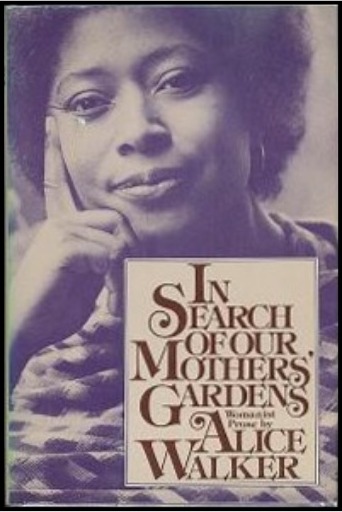 EssayIn Search of Our Mothers’ GardensAlice Walker, 1972Creativity and inheritance in gardens, quilts, and storytelling, where the usual categories miss them.
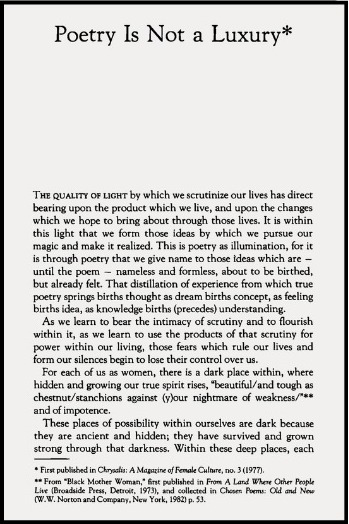 EssayPoetry Is Not a LuxuryAudre Lorde, 1977Poetry as a necessity: language for feelings and knowledge not yet articulated.