BackEpisode 05
Episode 05 · Season 01 · Jul 9, 2026
Can Ethics Be Taught Through Imagination?
GuestChristopher Robichaud
AffiliationEthics and public policy, Harvard Kennedy School
HostSarah
Episode05 / S01
ReleasedJul 9, 2026
Christopher RobichaudEthics and public policy, Harvard Kennedy School

SarahHost, SPS Conversations
Selected passages. The full corrected transcript is in preparation.
1:03
Robichaud
It doesn’t take too many years of experience in the classroom to learn that standing up and lecturing often does not give you the result that you want. It goes in one ear and right out the other. Ethics is about how we live our lives. Being a completely unapologetic geek and nerd, I leaned on the things that animate me: superhero stories, horror movies, games. It turns out there’s a lot of ethical themes in those spaces if you know how to look for them. And I resist, passionately, this idea that you need to be entirely serious in order to do deep and important kinds of learning.
8:51
Robichaud
What human nature involves, when it comes to ethics, is that we actually do want to do good. We want to live a virtuous life — and we want it to be super easy. We don’t want friction, complexity, trade-offs. And that doesn’t always align. Sometimes doing the right thing is hard, and when we come up against that, that’s when you see the wavering. So the way to teach ethics is to surface that: let’s talk about situations with hard trade-offs and friction, and get you comfortable making decisions in those spaces. One of the challenges right now is that the minute discomfort emerges, people resist it and collapse back into self-interested behavior.
11:02
Robichaud
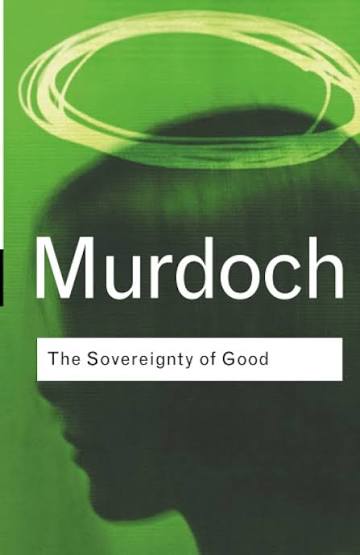
There are philosophers I deeply respect who say moral reasoning is important, but robust moral leadership can’t just be that. There’s also moral perception — learning how to see the world differently. Thinkers like Iris Murdoch, Simone Weil, entire Buddhist philosophical traditions that emphasize right seeing. I realized I’d been focusing a lot on moral reasoning and not so much on moral seeing — taking in the world in a morally rich way. And I don’t think you can teach that without engaging the arts: song, film, poetry, games.
13:45
Robichaud
Some of the work I do leans on philosophers who think we have much to learn from what we code as negative emotions: our anger, our grief, our anxiety, our shame. Typically the suggestion is to get past them as fast as possible. I really believe — and I’m at heart an existentialist — that there’s much to learn by looking into those dark spaces. Nietzsche has this idea of staring into the abyss and learning how to laugh. Both are important. Have a good sense of humor, but don’t be afraid of looking into the darkness.
16:22
Robichaud
I would be thrilled if students came out of my courses with more curiosity than they went in with — more appetite for what I call, following other philosophers, disorientation. That moment when I don’t exactly know how to move on, and I have to sort of live with that for a little bit. Success looks like the disposition to be more comfortable with the discomfort that comes with a lot of what life throws at us.
20:37
Robichaud
Imagine we’re all in a classroom, and I say: everyone go to the window, look out, then come back and paint or draw what you saw. Some will try to capture the shape of things. Some the colors. Some something abstract, to capture their mood. Almost no one, without training, can take in the whole scene. Navigating political and ethical landscapes is the same. We come into them focused on certain things, and we need to hear what other people are seeing to enrich our taking in of reality. You cannot be an ethically sophisticated moral person without being committed to trying to take in reality as it is. And none of us, on our own, have the whole picture.
34:11
Robichaud
I’ll form an opinion, then I’ll examine it and think I got it completely wrong. Then I’ll examine my examination. Then I’ll ask whether the entire formulation of the question was ill-conceived. Then I’ll play with my cats, go for a walk, come back, return to an absolute love affair with my first answer, then realize the love affair is over. It’s not a great model for having to make a decision. But it is a good model for never being entirely satisfied with where you land. The spirit of philosophy is a spirit of constant interrogation — not just of the answer you gave, but of the assumptions behind it.
Discuss this episode
0 commentsNothing written yet. The first comment sets the tone.