BackEpisode 04
Episode 04 · Season 01 · Jun 20, 2026
What If Free Will Isn’t the Whole Story?
GuestJon Hanson
AffiliationHarvard Law School
HostHaze
Episode04 / S01
ReleasedJun 20, 2026
Jon HansonHarvard Law School

HazeHost, SPS Conversations
Selected passages. The full corrected transcript is in preparation.
2:56
Hanson
I see law not as something we should be teaching doctrine first, but problem first. Students come to law school because they see a problem they want to address. I try to keep those problems front and center from the first day.
7:11
Hanson
I sat with boxes, going through all of these tobacco documents, and discovered the industry had a two-part strategy. In public, it presented a story of the consumer as a free chooser who chose the product because they liked it. But behind the scenes, they told a very different story — about vulnerable consumers and communities that could be targeted, about how nicotine could be adjusted to enhance addiction, about how to target young people. As I saw what they were doing, I came to believe that I had accepted a set of stories about ourselves that was wrong. And as I studied other industries, what became clear was: this is not the exception. This is the rule.
14:14
Hanson
If you think about what law is — law is a collection of frames that pretends to be all about facts. A lot of times those facts are highly selected. Law tells causal stories: when something bad happens, the loser will be the one who made the choice. The culturally dominant story, and the legal story, is often an incorrect story. The facts aren’t determining anything. The frames and the interpretations of the facts are determining everything.
21:24
Hanson
Mind scientists call this the fundamental attribution error. If it’s that fundamental, maybe we should be predicting against it. One question you can always ask, any time you’re telling or hearing a story: is there another version of this story that makes the person not a dispositional actor but a situational character — someone moved by context? What would it take for me to believe that?
23:57
Haze
Like the Milgram experiment — people were told to give electric shocks for wrong answers, and even as the person protested in visible pain, participants continued whenever the researcher said, “Please continue.” It’s easy to say those people chose to hurt someone. But when you look at the authority, the pressure, the structure of the situation, you start to see how much the situation was determining the actions.
24:24
Hanson
That was a perfect encapsulation of the insights of Stanley Milgram and much of social psychology. The whole message of the experiment was: it’s not the kind of person you are, it’s the kind of situation you’re in. Our legal system is very poorly designed to deal with situational factors, which is one reason many of our problems right now are systemic. And I think this is by design. The ability to construct situations that lead to behaviors — and then blame the person engaged in the behavior — is a way of insulating ourselves from the way we’re implicated in producing that behavior. We live in a Milgram experiment. The question is how many people are going to call it that.
29:12
Hanson
Students come to law school believing there’s something wrong with the world and that law is a place where they can do something about it — and in some sense they are taught that that’s not the case. That happens through compartmentalization. The research on what happens to law students is sometimes called public interest drift. When students arrive, you ask them to draw a circle with their core values in the center. Trace that over three years, and “my role as an attorney” gets further and further from the center. For many of them, by the time they are 2Ls, it’s outside the circle.
32:53
Hanson
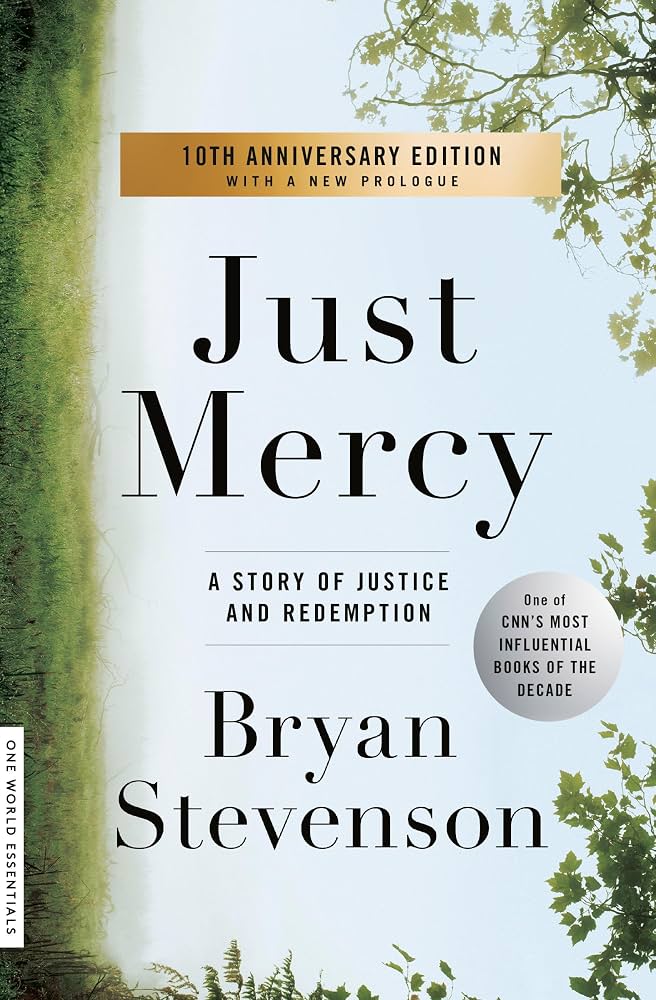
Each of us can do much better by staying proximate to problems, to suffering — Bryan Stevenson writes about proximity. Make a habit of asking where power is operating in a particular space or story. Don’t trust the stories told in law meant to legitimize outcomes. Surround yourself with people who push back. And we shouldn’t hide this stuff — I’m not going to pretend I’m somehow objectively above my positions. Putting them away, hiding them, concealing them makes us not tend to them. And if we’re not tending to them, they’re kind of dying. That’s something I think we should resist.
Discuss this episode
0 commentsNothing written yet. The first comment sets the tone.