BackEpisode 02
Episode 02 · Season 01 · Apr 30, 2026
How Do We Transform Ourselves and the Systems That Limit Us?
GuestHouman Harouni
AffiliationHarvard Graduate School of Education
HostSara
Episode02 / S01
ReleasedApr 30, 2026
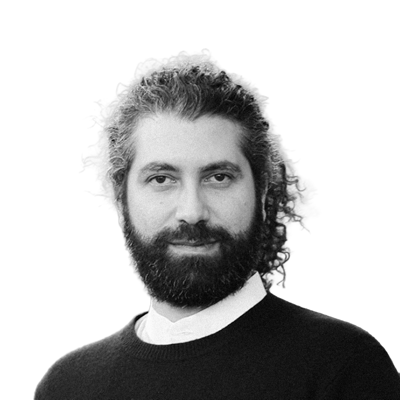
Houman HarouniHarvard Graduate School of Education
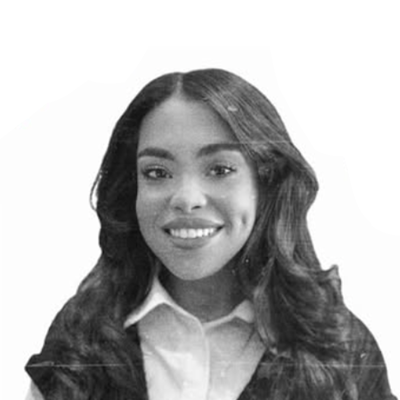
SaraHost, SPS Conversations
0:00
Sara
Today we’re speaking with Dr. Houman Harouni, a lecturer at the Harvard Graduate School of Education and the person behind what might be the most talked-about class at Harvard right now. His course, Transforming Systems, asks a question that might sound simple, but it isn’t: what are the systems responsible for limiting our freedom and our creativity, and what does it take to actually change them? Houman, thank you so much for being here with us today.
0:29
Harouni
Thank you for having me here, Sara.
0:31
Sara
When I first heard about your course, I heard about it like you’d hear about something that’s become a legend. Stories of how it has pushed students further than anything else they’ve taken at Harvard. Some students loved it; some were shaken by it. When I read the course description and it said, “Only take this class if you’re mentally prepared to do real transformative change,” that was enough for me to enroll. I want to ask you, Houman: what is it that you’re trying to accomplish in that room?
1:00
Harouni
I’m trying to prepare a group of people to be able to face reality in such a way that they can change it. And the first part — facing reality — is one of those things that really shakes people. In order to do that, I can’t do it as a lecture. I can’t just come and tell people. I have to actually create the situation in which you are face to face, in contact with all of those things that keep you limited, and then keep a group limited, and then keep an organization limited, and then keep a society limited. So it’s a lot for anybody to handle. And over time I’ve learned that you have to be upfront about that. It adds to the mystique of the course, but it’s actually pretty simple — and under different conditions I think you would have twenty or thirty courses like it, and this would be just one simple experience.
2:03
Sara
I like that you explain it as something that you have to let happen — an experience that we have. And that’s exactly what the course looks like. It’s nothing like a traditional classroom. You’re not standing in front of us lecturing. You’re letting us do our own work, interjecting only when necessary, like a conductor steering the discussion when it has strayed far from whatever it is we’re supposed to be doing as a collective. My question is: how do you make sure you have an impact and reach your goal when you’re so minimally involved? You don’t interfere much with the work, and you make it feel like it’s entirely our own freedoms and liberties that take over the class and create the structure.
2:47
Harouni
My job, very often, is to make life inescapable, and to hold people to what they already know. You get a group of people in a classroom and they first try to conduct it like a regular classroom, because that’s what they’re used to. Then, once they find out that’s not really going to get them where they need to go, they begin to try to change it — again, in ways they’re used to. Can we break into small groups? Can we designate a leader? Can we raise hands? When I’m intervening, I’m not just bringing them back to a specific topic. I’m highlighting the things that they have felt, and they have said, and that have been ignored. A lot of my work is raising up what has been ignored, what has been sidelined — and showing, eventually, that that’s at the center. The thing you try not to see is probably the very thing you need if you’re going to do something with the people around you, or with yourself. And you have to do this at many levels: at the individual level for each student, at the level of the group, and at the level of the world that surrounds them at the time. If they’re trying to escape a topic, it’s usually a pretty good move to show them that. Over time students get used to it and find value in it, and my interventions become both less frequent and a little freer, where they can also see in what I do a range of possibilities that didn’t exist. I think in your class, at some point, I got down on my knees — which is something I haven’t done in any other class — and begged an individual. Right now it doesn’t make sense to talk about it, and I don’t recommend it to anybody, but at the time it was the necessary thing to do. That kind of thing also shakes people: oh, if he can do something like that and it works — or he can survive it — maybe there are things that I can do, and that I will survive, eventually. It’s a delicate dance, and I get many things wrong all the time. The only thing is that I don’t try to hide it when I’ve gotten things wrong.
5:18
Sara
A lot of us throw around the word transformation constantly. Personal transformation, systems change, transformative leadership. But if I’m being completely honest, I’m not sure we fully understand what it means. What do most people commonly get wrong about the idea of transformation, and where does it really begin?
5:36
Harouni
They think it’s an upgrade. And they think it’s either a solution to a problem, or a negotiation where you rearrange things within a frame. Those are, by the way, wonderful things to be able to do, and they’re very often needed. But there are other orders of challenges that require the total reframing of something. They require you to stay with the tensions — not in order to solve them, not in order to move the chairs around the deck until you find an arrangement that’s more pleasing to you, but in order to bring about a total reconfiguration that would impact many parts of the system at the same time. So it’s not an upgrade; it’s not a fix. And what a lot of people get wrong, other than that, is that they confuse it with wishful thinking. They think that if they just complain enough, or dream big enough, or lecture at people enough, then a change is going to come by, and they feel like they’re doing transformative work — whereas all they’re actually doing is giving voice to one aspect of the existing system. It’s a different thing to change, for example, the entire language of a people.
7:04
Sara
To anyone who is listening and hasn’t experienced this unique experience that is our class, I want to paint a picture. We came into the first class with no pre-assigned syllabus, just a reading you’d given us. You started by going to the front of the class and explaining who you are: I’m Dr. Houman Harouni, I’m an employee of Harvard University, I get paid so-and-so. This is the teaching team that will be working with you; they also get paid so-and-so. And then you tell us to begin the task, and you give us no instructions on what that should look like. We immediately jump in and try to create the structures we’ve been witnessing our entire lives. The minute you said that, people stood up and tried to divide the time. Some tried to take leadership and were immediately shut down. We sat there trying to understand how to make this class look like every other class we’ve taken — which is very counterproductive to what we’re trying to achieve in that room. This is what we do in our daily lives: even if we believe we’re yearning for freedom, the minute we’re given that freedom, we resort to our old habits.
8:26
Harouni
It’s what we are aiming for — to create a microcosm of the world. But we try to make it very concrete. Most people have a very hard time engaging what is really in front of them. So telling students: listen, I’m getting paid to do this, most of you are paying to do this, there are structures around us, there is a university structure — at the very beginning, instead of giving students a bunch of slogans about what great things we’re going to learn together. One of the reasons I sit down and don’t say anything, don’t smile, don’t nod — keep a kind of stone face — is so they realize they can’t rely on my sense of what is right or wrong, or the direction they need to take. Which is pretty much how the world is going to be for them if they ever try to do something real. If you’re just following the rules, or following the current that’s carrying you, you have a lot of certainty: you know what’s point A and what’s point B, and you vehicle yourself from one to the next. But the moment you try to change things, the moment you try to bring something new into the world, you confront the real confusions about everything. What’s the right value? Which way to go? Who to go with? Who to follow, if anyone? That begins to come up very quickly through this simple mechanism of a teacher who’s basically not doing his job — and whenever he does try to do it, it doesn’t look normal; it doesn’t look like he’s playing by the rules. What you don’t want is for the teacher to become the hero. You want people to hate this teacher a little bit, to have feelings that are not entirely sympathetic — so that in the future they also realize that authorities are not going to be forthcoming. They’re not going to be transparent. They’re not going to be kind. They’re going to do what they’re supposed to do, which is represent and uphold the survival of the system they’re in. That’s where we begin. And then the students take it in amazing directions.
10:39
Sara
And there is this one phrase that you say at the beginning of the class. Can you repeat it for the audience?
10:45
Harouni
Your task, as I see it, is to create a discussion, to become aware of yourself in that creation, and to transform it. I say that in the earlier classes, and then in the later classes I might say something like: your task is to create a life, to become aware of yourself in that life, and to transform it. But by then it doesn’t really matter if I say it or not. The students know the task. It’s just a way of anchoring them and reminding them that we’re doing something together, and whatever intensity they’re feeling, it has a purpose — because, as you know, it gets very intense pretty quickly.
11:33
Sara
I want to go back and see what role your personal life experiences played in shaping this kind of work. You started off as a teacher, and then you decided to leave. What did you encounter in traditional education that made you leave, and what did you feel was so missing that you had to come back and create something entirely different?
11:56
Harouni
Going into teaching was itself a running away. I was actually doing political science, and kind of very high-level mathematical stuff next to it. And I was really trying to think, as a very young person: what does it take to change this society, or its institutions, for the better? I’d just barely come out of college, and I realized that working with adults really wasn’t easy. It seemed like they were not geared toward changing things. There were some basic capacities that were missing — like bravery, like attention, like a certain kind of compassion for yourself and for other people. A lot of these things seemed to be missing, and so I thought: you’ve got to start earlier. And I went and taught basically every level of education you can think of. I think I’ve been spared, at this point, kindergarten and geriatrics — but I taught high school, middle school, and then elementary school. And what occurred there was that I realized that what I was experiencing with adults is also present with children. This was a purer environment in which I could really understand how people learn. And real learning is a profound form of change — not just downloading ideas. Once I had grasped that, I could come back and start doing work at the intersection of learning, politics, even organizational change and organizational development, with a lot of other threads of my life I could bring into the space. It had room for a lot of things — even literature and art and philosophy could find a home in what I was doing. But there’s very little space in society for people who want to do that kind of work. There aren’t that many institutions that allow you to do it. And Harvard was really a refuge. I didn’t come here because I wanted to be a Harvard professor. I came here because I couldn’t easily find another place to exercise these ideas and see where they lead me, and where they lead other people. And the university really gave me room. They’ve shown me a lot of tolerance — because in the early stages, this kind of work isn’t neat. It doesn’t look easy. People walk out of your class, go straight into the dean’s office, and say, “You’ve got to fire him.” And I was lucky enough to be surrounded by people who were willing to see some kind of value in my failures. So I’ve stayed. I don’t know how long I will stay, but for now it’s a very good perch.
15:04
Sara
The readings you assign us represent a very wide range of thinkers — critical theorists, poets, philosophers from Western and non-Western traditions. Were there any particular thinkers who shaped how you see the world?
15:18
Harouni
Too many to name. I would have to have a list of the top hundred.
15:24
Sara
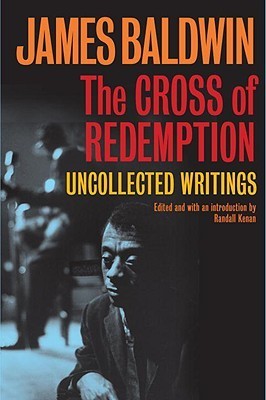
I can guess one of them — James Baldwin.
15:29
Harouni
Baldwin came to me late in life. And I found him sitting on the same bench — but he was grand, and he was far more poetic and precise than I was. We were in great agreement. I didn’t have to struggle very much with Baldwin, the way I’d had to before with people whose names you’ve heard — Nietzsche, the old Daoist philosophers, and so on — and some people whose names you would not have heard. My father, for example, had a very deep influence on me. And when you become obsessed with this question of education and learning and change, you can start traveling. I think I went all over the world if I heard that somewhere, somebody was doing something. That has taken me to villages where there was a teacher working with very few students; it’s taken me to all kinds of religious societies where I think a very profound kind of learning is happening, and I’d love to know what could be learned from it. And these were challenging individuals. People who are trying to do something in the world are usually not easy people to be around. Probably I’m not very easy to be around either. Now what has happened is that the time comes when you have a hard time finding the people who will shake you — if you’ve done enough reading, enough learning, and especially if you’ve developed the habit of not letting something pass you by without it hitting you, without you understanding it. I’m now in a space where, in order to be really shaken, I have to do my own writing and be in that kind of conversation with myself. The other part of it is my students — because I watch them think, and watching somebody you know create something, even something mediocre, is always a greater joy and a better learning experience than the amazing creations of people you don’t know.
17:48
Sara
There’s something I’ve been thinking a lot about in my own tradition. In Islam, knowledge without action is considered incomplete. It is not enough to just understand something; you’re accountable for what you know. And yet in our education system that doesn’t seem to be the case, because we reward knowing without asking what you’re going to do with it. I know you’ve written about how even something as seemingly neutral as math carries a hidden logic — that the very way we phrase word problems teaches children to reduce things to their exchange values, and by doing so we reinforce a system of inequality. So when we reach that level of seeing and understanding the systems around us, what are we actually responsible for doing with that knowledge, and what gets in the way of acting on it?
18:36
Harouni
I never know what people are responsible for. That’s the beauty of responsibility. If it were decided in advance for you — if there were some source that could tell us what we are responsible for — it would not be responsibility. It would already be a task, or a duty. The beauty of that word, in both English and in Arabic, the language of the text you’re referring to, is in its reference to a question. Response. Question. Responsibility. And we begin to think that knowledge is a kind of possession — that we can hand it to somebody else, so that when the question comes they’re going to give the right answer. We have to understand our education systems as places that are not primarily designed for learning. They are industrial-scale babysitting organizations, and they err on the side of mechanisms that make that primary task easier. It’s very hard for them to connect with the real world. The good news is that nobody can overcome human responsibility — at least not yet. We don’t have the right drugs to overcome it.
19:57
Sara
You mentioned how the education system does something to the adults more than it does to the children. Looking back, what my education has done for me is separate the idea of knowledge from acting on it. So I want to push you on that point. I find myself constantly paralyzed by this thought that I don’t know enough to create something. I still must go read more, seek advice, learn from my teachers, extract more knowledge — and then, when I have enough, I’m going to go apply it.
20:29
Harouni
Right — and we will never be ready. Knowledge is not a possession. Knowledge is a process, and there is no way in which you just know something without doing it. What you know is how to talk about it. What you know is how to convince other people that you know. But real knowledge — and this is a key point — requires risk-taking. It requires you going from describing to facing consequences. You form a lot of ideas by reading, and they’re pretty good for opening up your blind spots. You understand: this is something I wasn’t paying attention to. You even learn that some experiments have been done here and there that can help. But they’re not any replacement at all for the kind of knowledge you get once you’re in the situation, confronting the situation. For that, you have to jump in. For me, knowledge and danger have never been separate, and taking that very first step is very dangerous and very risky for people. They pile up what they think of as knowledge — but the danger element is always there. Whenever you read any statement that is useful — children should feel connected to what they learn; we need to have distributed decision-making; democracy is a pretty good form of government — the moment you hear it, the danger element is already there. Your mind and your imagination supply it for you, and these get piled up inside you. And what you then meet is the kind of intellectual, the kind of citizen, who on the one hand is full of good slogans, and on the other hand has piled up so much danger inside them that they’re frozen. They feel paralyzed by that fear. Whereas when you go out into the world and try something a little bit, you find out that there are dangers — but they’re not the ones you thought. They’re not the ones you imagined, because your imagination was also formed by the system you were in. That’s why I say I can’t lecture these things. The things I’m saying here — I don’t know, when someone reads them or listens to them, what they think. They should take the first step.
23:14
Sara
I feel like this is something that was reinforced for me through the experience of your class. Like you said — when I’m stuck in my head, it always seems worse than when I actually try it out. There were so many ideas and topics I thought there was no way I could bring forward to class. Too risky, too dangerous. And because I kept them in my head, I imagined all these scenarios. When I brought them to life in the class and actually spoke on them, I realized: hey, it’s not that bad. So always take that first step — regardless of all the ideas you’ve been cooking in your head, reality will teach you something different.
23:50
Harouni
Yeah. Help arrives from places that you did not think. There are mighty forces that are also present, and they’re not activated until you try something.
23:57
Sara
We’re very conditioned to think in binaries — good or bad, right or wrong, with us or against us — to the point that it becomes almost impossible to hold two contradictory thoughts at the same time. In your class, you introduced the concept of the emergent alternative.
24:20
Harouni
Contradiction is a very good way for us to manage the world, because you can both feel angry about something and feel stuck. Now you have the moral superiority of seeing that something is wrong — but you also have the excuse that nothing much can be done about it. The emergent alternative I talk about is not the solution. It’s an opening. Very often it emerges from a reading, from a profound discussion — and it doesn’t sound sensical when it first comes. I can give you a very concrete example. In the civil rights movement in the United States, the discussion at first was very much about equality before the law. Everybody knew the conditions were inhumane — but how to move forward became this question of equality. And the problem was that in order to become equal before the law, you have to be within the law. There were a lot of attempts to fix this, and you would find out: well, you’re not sitting in the courtrooms, you’re not among the cops, you’re not in the areas of power. That condition continued until, from the corners of the movement, a kind of whisper, a kind of idea came forward — stated very simply, it was: to belong where we don’t belong. Now, that sounds contradictory. How can you do that? But the embodiment of it is Rosa Parks — who was a profoundly educated person, who was in these debates and understood them — sitting in the bus and not moving from that seat. To belong where she doesn’t belong, to attract the consequences, and to force society to deal with those consequences. To belong where we don’t belong is the opening. It’s different from wishful thinking — equality before the law is more of a wishful thinking; everybody wants it. It’s just that when a contradiction comes and you’re thwarted, you don’t really know what to do with it. You can observe this in all kinds of movements in which the real framework of society — sometimes even technology — has changed: this holding together not just of contradictions, but of as many important elements of the system as possible, in the form of an image, an idea that people can grab onto and work with for a while. As I said, it’s not the solution; it’s a path. That idea allowed for Rosa Parks. It allowed for sit-ins at diners. It allowed for the March on Washington — which had been an idea for years; in the early 1940s there was an idea of a March on Washington — which is precisely to belong where we don’t belong. And then it shows itself when people exercise the kind of bravery we’ve been talking about, to put themselves on the line in service of it.
27:41
Sara
Something I’ve noticed a lot of us do — and I catch myself doing it too — is that we’re really good at observing things happening around us on the surface, and we ignore what’s really going on underneath. In your class you’re constantly asking us to read — not just to read texts, but to read situations, read our emotions, read our discomfort. I’m asked to read my classmate, to read myself. Can you tell us more about what you mean by reading in that sense?
28:11
Harouni
Reading is a suspending of your need to react — which includes your need to assume that you know what you’re looking at — and instead to pay attention, as much as possible, to the patterns that are underneath something. Most structures we deal with in any situation are there to make the situation predictable for certain actors. When things are good, that looks like safety and comfort and having a direction. But when there’s a disturbance in the system, it looks like a person who has nailed one foot to the ground and keeps walking — going in circles and circles, in pain — and until they look down and see the nail and understand what situation they’re in, they are not going to be able to do anything else. The other part is that you have to look inward. Because your thoughts, your desires — they don’t just come from heaven. You’re not a separately woven piece of cloth. You’re woven of these same materials from which the situation has been created, and you have internalized a lot of patterns, a lot of assumptions, if-then statements. If you don’t read those, and you don’t look at those tensions closely, you don’t really have a path forward. You don’t know where you’re going. And there’s a final element to this — I really believe this — that this act of paying close attention without reacting, without jumping to fix, activates the imagination in a way that nothing else — no poetry or movie or whatever — is going to do for you. Through that, the opening will come. Through that, a little hint will arrive — not just of what you’re looking at, but of something else that could be.
30:23
Sara
In this same sense of paying attention to our reactions — one of the most common instances of your interjections in class is when someone says something controversial, something that strikes a nerve in us. We immediately collapse all our attention onto that one person. You’ve called that localization. We focus on the individual and completely miss the bigger picture, the real question. Why do we do that, and what does it take to become aware of it — and stop?
30:52
Harouni
Well, it makes us safe. If somebody voices something problematic, something outside of what we’re used to, it would be great if this was her problem — then it wouldn’t be our problem anymore. If we just focus on that one individual, we can neutralize them. And not necessarily in a violent way, though it can become violent — you can neutralize them with praise. Oh, you’re so brave for saying this. Oh, you’re so articulate. There are all kinds of ways. A skilled facilitator, or a leader, can take the focus away from the individual and bring it back to the organization, back to the system, and make everybody face that discomfort, face the new idea that has been presented. One of the things you learn is to not look where the opposition is looking — to never be confused by that. If they’re looking at the individual, they’re looking at one spot. If you can manage to keep your view on the entire system, you have a tremendous advantage. I try to teach that to my students. I think it’s one of the lessons they learn very quickly.
32:07
Sara
A lot of us were trained — in school, at work, in life in general — to lead with our heads and push everything else down. Feelings get treated as something messy, something unpredictable. And yet you said something I keep thinking about: that without your feelings, you have no access to your imagination. This is something I personally struggle with, and I know a lot of my classmates do too. In class you’ve constantly pushed us to engage in creative pursuits, to read poetry, to speak in metaphors. What I’m wondering — and this is something I’ve woken up to after taking your class — is that transformation, to a large extent, requires some level of imagination. Why is it so important to real change, and why do so many of us struggle to access it?
32:59
Harouni
Imagination is not a luxury. It’s not a decoration on top of everyday life. The reason you need your feelings is that you need to be impacted — and you draw from that impact. I need to be unhappy with the conditions I’m in, in order to imagine something different. I need to be very happy and very joyful about some little thing I have observed, to want to give it more life. That’s the engine.
33:31
Sara
One thing we do is that we’re really good at talking about our feelings, but maybe not feeling them enough. In a typical Harvard classroom like ours, that looks like theorizing concepts and speaking in abstracts. And by doing so, we’re avoiding the thing that’s sitting right there. You’ve called this intellectualization.
33:51
Harouni
Cold intellectualization. It’s a form of avoidance. It’s an escape.
33:56
Sara
You’ve written something about this that I would like to share, because I think it deserves to be heard. “I’m asking a terrible thing of you. I’m asking you to be devastated, to stay with that feeling, to speak from it, to act from it, and to stay open to the strange images that emerge from that process. I’m asking you to be poets and refugees and pirates in the cold world of administrators and bosses and parole officers. My only concession is this: you will be a better administrator, a better boss, and a better cop if you can do this. Because at the very least, you will be able to do what is so absent in our world today — to truly think.” Most of us will do almost anything to avoid feeling devastated. What does it take to sit with these uncomfortable feelings long enough to let them change you?
34:48
Harouni
Oh — sorry. You’re reading that quote. That quote hit me the way I was hoping it would hit you. Your words, your words — I keep reading these emails all the time. It’s also, probably, that I don’t have a good answer.
35:02
Sara
You’re asking us to feel devastated — but we’re running from it. We’re not sitting with it.
35:08
Harouni
There’s nothing wrong with intellectualization, but we very often use it as a way of reducing our experience to what we already know. If I sit here and just say “I’m sad,” and then, based on that, I go into fight or flight — try to fix it right now so as not to be sad, go out for a drink, or pretend it’s not there — what I’m really missing is a very important kind of data. That feeling is there because you’ve encountered something in the system that you cannot easily explain, categorize, put in its right place. And if I don’t stay with it — if I don’t try to not just say “how do I feel” but ask “what is this feeling asking of me” — think about the difference between “I’m sad” and “what is this feeling asking of me?” Asking that question will, first of all, make it easier for you not to be flooded by the emotion, to be in contact with it, and also to try to understand the implications. You can’t trust the emotion as the end-all-be-all. You can’t trust the cold intellectualization. What I really love is a kind of warm intellectualization — an intellectualization that constantly goes back and asks these questions.
36:38
Sara
Warm intellectualization as opposed to cold. Can you explain a bit more about how they’re different?
36:44
Harouni
Cold intellectualization tries to reduce reality and make it manageable. It’s about management, control — and a very paltry form of control, because it doesn’t exert real power in the world, or even over the individual. A lot of people cry in my classes. I don’t think I’ve taught a class in the last however-many years where nobody has cried. Those tears are thoughts. Those tears start flowing because the individual has come in touch with something they can’t easily and quickly explain away. It’s important for me to try to teach people to stay with that. Some people experience it in a big way, in the form of tears; for some people it’s a little shaking, or a heart palpitation. There isn’t a hierarchy of how the feeling expresses itself. You gain a lot more pathways than just fight or flight. And it’s a pretty good thing to try — to see: if I express this, is it going to do something? Am I going to learn that I’m not alone? And I let it go on. Accepting a weakness is essential to doing public work, and it’s certainly essential to change work. Weakness is not something we can get rid of. It’s constitutive of who we are. We are pretty weak creatures — very fragile. It takes a lot to maintain equilibrium for a single individual. You know the idea that it takes a village to raise a child? You remain the child for the rest of your life. That fragility is inside you. Being in touch with it is necessary for doing the work. At the very least, you understand others.
38:36
Sara
And accepting it reaffirms the idea that in order to learn there needs to be a level of humility — and in humility you acknowledge your weaknesses, your shortcomings. Accepting that you are a fragile being is one of those things.
38:47
Harouni
I hadn’t thought of it that way, but yes.
38:56
Sara
Something you said has stayed with me, and I’m going to read it out loud. “Recognizing the relationship between the stage and the underground is essential to creating new social structures. Know when to stay away from the light. Know when to expose yourself. Know when to seek help openly. Know when to do so in hiding. Know when to convince people behind the scenes to join your project. Know when to push your co-conspirators to come out of hiding. A great deal of your work will be dedicated to creating this delicate, dangerous balance.” When I hear these words, I hear an acknowledgement of the risk and the danger and the courage it takes to create change. Because at some point it’s not just about the inner work — reading yourself, doing things on your own. At some point knowledge requires you to act, and to get on stage and expose yourself. So how do you know when to get on stage and when to remain underground?
40:02
Harouni
I don’t know. If you ask me what I’m working on right now — that’s one of the things. It’s true that if you expose what you’re creating too quickly to light, it can be neutralized — sometimes through co-option — or it can be bought, very quickly. And it’s true that if you stay in the protective darkness for too long, you’ll mold, and you will never really understand the implications of what you’re doing. One of the signs I do know: when you get together with a group of people to create something, and at first you’re doing it in a limited space, with protective mechanisms — you’ve got to ask yourself: are you facing enough contradiction, and enough internal opposition? Because if what you have is a group of people who get together, and every time somebody says something the others say “amen,” and they all seem to agree with each other — you are setting yourself up for disaster. The moment you come to light, the first wind of opposition is going to make you sail to places you really didn’t intend to go. In my personal life I make a point of that. I don’t bring anybody into my orbit who says yes to me, or who admires me so much as to not push back. And I train my teaching teams — you’ve witnessed it happen in class, when they interject and tell me to stop doing something, or to change the way I’m doing it, and I accept it and let them take the lead, or I argue with them. I want students to see that. I want them to be able to not just take criticism but take combat — to see combat happening. It’s a terrible thing that’s happening — it happens in tech, it happens in medicine. One of the worst tragedies for an organization trying to create, say, a new drug, is if everybody in the room agrees. Because what occurs is that you begin to chase false positives. You throw good resources after bad ideas. You don’t heed the counter-evidence coming your way — and millions of dollars in, you finally face it when you go to the FDA, which is the stage for those people. If I’m evaluating an organization and I see that kind of culture, I know they’re in trouble. All the worse for people trying to create a social movement. And unfortunately our appetite for combat has dampened — especially among people who are trying to impact society in some way. We have such a need to be around people who agree with us that we train each other for it. We exclude people who disagree. And then you go to the stage, and the world either has neutralized you already — because you’re not strong enough, you haven’t gathered enough forces through training — or five comments on your Twitter account shake you and your resolve, and the resolve of the people around you, and you disappear very quickly.
43:31
Harouni
It’s an amazing skill — and I wish I knew how to get better at it — for a person in a position of leadership to take things underground when everybody around them is saying: let’s go, let’s take it out, people need to see this. And also to bring things to the stage when everybody’s scared, when everybody feels unready. Very often leadership has an element of that work. Curating the space for the work is a difficult and beautiful skill.
44:11
Sara
I love that you talk about our appetite for combat — that’s something I relate to maybe a little too much, and I always use the term “I’m exhausted.” When I was in your office hours, you asked me to do something and I kind of shrugged and sighed. You asked why, and I told you it’s just exhausting. And you immediately jumped in: no — say to yourself, in your head, that I can do this. I have the ability to do this. I have proved it to myself so many times. So when I left your office I was thinking: I really need to work on my mindset. On my appetite for combat — my stamina for not giving up when somebody, or the room I’m in, doesn’t agree with me, and I snap and say it’s not my job to teach you. What does it take to keep hope alive? I know I care about so many causes, and so many people care — but caring is not enough. What do we do to make sure this appetite is sustained, and we don’t give up hope?
45:20
Harouni
You avoid that, in great part, by remaining in connection. I’m a big fan of rest. I’m a big fan of cyclically withdrawing. Constant avoidance, or constant bickering — these are the things that bring us to an end. We’ve got to remember that transformation, change, the new — these are not exceptions. They are the rule. It’s the endless cyclical movements, the repetition of the same, the structures that bind — these are the exception. And so underneath everything that seems to reduce you, underneath everything that seems to hold you in place and not let you move — underneath all of that, a tremendous, unending, inexhaustible current of change and transformation is constantly flowing. Believing in that — knowing that it will take nothing other than staying with reality to activate those forces, to at least see them or touch them — that is a very economic way of coming out of your exhaustion when you’re feeling it. Try, Emerson says, and mighty forces will be with you. That’s what he means. Put a toe in, and you will see that the current is flowing, and it has more force than you thought. And you don’t have to do it all. You will be aided.
47:06
Sara
Every time you speak, I’m taken aback by the level of wisdom and the examples you draw from. I want to follow that thread and ask: how do you approach forming an opinion?
47:20
Harouni
Never alone. And if I’m not privileged enough in that moment to be surrounded by people who can give me counsel — if my lot in the moment is to be alone — then I have the company of all those people who are no longer there. I’ve learned how to be in good company with them. I’ve learned how to let them speak in their own voices, and ask me questions, and let me really think. In the end, though, you don’t make the decision by having an accumulation of good ideas. What you try to do, as much as possible, is to go in a direction but leave some pathways open. So it’s important not to present yourself — it was very kind of you to say these wonderful things about me, but it’s important not to rely on appearing wise, or very competent, or very much in the know. Better to be a little bit of a bumbling fool in the world. Don’t try to be perfect. I can’t do that; I’ve never done anything perfect in my life. Occasionally I have hit a good note, and managed to follow it with another, sort of appropriate note.
48:55
Sara
Well, one good note you’ve definitely hit was offering this class. I know for a fact I’ve been transformed personally, and I’m continuing to take the guidance and wisdom. And I must give you immense credit: the fact that we’re here today, in this room, in this speaker series — the fact that the Society for Perception Studies exists today — is because it was born out of your class. I first met Simi and Haze in the second week of class, and we connected and realized we had so many ideas, so many things we wanted to work on. Then we met Matali — so you have all the founding members of the society, who came together in your class. We didn’t know what we were working toward, but we knew there was something we wanted to do. There was an action we wanted to take, and somehow we ended up here, creating the Society for Perception Studies. We’ll always take the lessons we’ve learned from you and try to incorporate them in our group dynamics. We work together, we call each other out, we have a bigger goal we’re trying to accomplish, we don’t let each other get comfortable. We’re constantly learning and growing. I don’t think that would have been possible without you and your teaching. So thank you so much for a wonderful conversation. I’m filled with sadness that we have only one more class left with you — I wish it were something I could take for the rest of my life — but I’m really grateful, and I know I’ve learned so much.
50:11
Harouni
Thank you for helping me feel useful. That’s a good feeling to have.
Discuss this episode
0 commentsNothing written yet. The first comment sets the tone.